The Dream Cannot Be Licensed to the Well-Connected
A cannabis industry is starting to take shape in Eswatini. But before anyone celebrates the headlines, it is worth asking a harder question: who is this industry really being built for?
The recent Ministry of Agriculture hemp trial conference in Manzini signaled progress. According to Agribusiness Media in “Ministry of Agriculture Endorses Industrial Hemp Adaptability Trials in Eswatini” (2026), the ministry-backed adaptability trials cover at least four hectares and are meant to test agronomic performance, commercial prospects, employment potential, and industrial development opportunities for hemp in Eswatini. On the surface, that is exactly what a country should do before opening a new sector: test the crop, gather evidence, and understand what works locally.
But in Eswatini, the crop is only half the story.
The other half is power.
Anyone who has spent time around cannabis in Eswatini knows the market did not begin with a conference hall, a draft regulation, or a polished development narrative.
It has existed for years in a shadow space: tolerated in some places, punished in others, discussed quietly, protected selectively, and navigated through relationships more than rules.
Eswatini’s legal position remains constrained by older legal structures that do not clearly separate industrial hemp from the wider cannabis prohibition framework.
There is a long-running tension between official policy, private interests, and opaque licensing narratives in the country’s cannabis sector as reported in (VOA, “Eswatini Moves to Revise Century-Old Colonial Law to Legalize Medical Cannabis,” 2024).
That is why the current moment needs to be treated with caution as much as optimism. If a legal hemp and cannabis framework emerges without public education, farmer protections, and transparent access, the result will not be reform. It will be consolidation.
That is the central concern.

At Hemp Nation, the position is straightforward: cannabis development in Eswatini must begin with educational programmes, not elite capture. The first infrastructure this sector needs is not a private deal or a fenced-off processing site. It is knowledge in the hands of farmers, communities, and local entrepreneurs.
That means practical education. It means teaching the difference between hemp and high-THC cannabis. It means legal literacy around licences, compliance, land agreements, and supply contracts. It means helping growers understand genetics, seed quality, post-harvest handling, processing requirements, and how value is actually created across the supply chain. It also
means making sure landholders understand what they are signing before they become spectators in an industry built on their own soil.
One line from the Hemp Nation meeting on Eswatini cannabis development (July 2026) captured that fear clearly: “We don’t want Swazi farmers to lose land from great offers… from internationals investors who know the true value of cannabis” Another sharpened the same point: “Let us teach the people who have control of that land.” These are not abstract concerns. They are realistic warnings about what happens when legal reform outruns public preparedness.
That instinct is supported by wider research. A discussion paper in the South African Journal of Agricultural Extension argues that an inclusive hemp industry depends on supportive regulation, access to finance, and capacity-building for smallholder farmers, rather than assuming market participation will happen automatically (Mailula et al., “What Fundamental Structures Does South Africa Need to Put in Place to Build an Inclusive and Thriving Hemp Industry?”, 2025). Research on legal cannabis transitions in Zimbabwe also shows that legalization can drive agrarian change in ways that do not necessarily benefit smaller local producers unless governance is designed carefully from the start (Scoones et al., “Business as Usual? Cannabis Legalisation and Agrarian Change in Zimbabwe,” 2024).
The research angle matters here too, and it deserves more attention than it usually gets.
If research is underway, what exactly is being studied: agronomy, seed adaptation, health benefits, industrial processing, legal design, or commercial feasibility? As someone on the call put it, “Research is a very broad statement.” In an emerging sector, the word “research” can mean serious public interest groundwork, or it can mean selective consultation happening behind closed doors (Hemp Nation Meeting on Eswatini cannabis development, July 2026).
This concern is not unique to Eswatini. Broader policy scholarship has warned that cannabis regulation often moves faster than the evidence base and that research barriers can distort how law and markets develop (Levy et al., “A Research Agenda to Inform Cannabis Regulation: How Science Can Shape Policy,” Clinical Therapeutics, 2023; Pacula et al., “Developing Public Health Regulations for Marijuana: Lessons From Alcohol and Tobacco,” American Journal of Public Health, 2014, as summarized in later regulatory reviews). Article reviews find that the outcomes of regulated cannabis supply depend heavily on the design of the regulatory model rather than legalization alone.
If universities are involved in Eswatini, then transparency matters. Research should be publicly useful, farmer-facing where possible, and connected to local capacity building rather than merely serving as an upstream filter for already-connected actors. In a sensitive policy environment, university partnerships can either democratize knowledge or quietly centralize it.
There is also a legal backdrop that cannot be ignored. The proposed Production of Cannabis for Medicinal and Scientific Use Regulations, 2019 shows that a fairly detailed licensing framework has been sitting in view for years, at least in draft form (Government of Eswatini, Eswatini Cannabis Regulations, 2019). The document lays out licensing, security clearances, site controls, production standards, quality assurance, record keeping, transport, import and export requirements, research and development provisions, and rules for cannabis oil. In other words, the state has not been operating in a vacuum. The bones of a regulatory model have existed since 2019.
That raises an obvious question: if the skeleton has been there for years, why does the industry still appear to move through piecemeal permissions, exceptions, and trial-based access rather than a transparent, publicly understood framework? It is hard not to conclude that the delay has left room for informal influence to do what formal policy has not.
This is where the political economy of cannabis in Eswatini becomes impossible to ignore. Critics have already warned that legalization efforts in Eswatini could end up benefiting elites and large outside interests rather than ordinary farmers (VOA, “Eswatini Moves to Revise Century-Old Colonial Law to Legalize Medical Cannabis,” 2024; Semafor, “Eswatini Wants Legal Cannabis but Locals Protest,” 2023). That concern aligns closely with what emerged in the Hemp Nation meeting: a fear that the law, if and when it comes, may simply formalize advantages already enjoyed by people with proximity to power.
A particularly telling line from the meeting was this: “Everyone has to go for passes against the current standing legislation.” That is the problem in one sentence. When the formal law is outdated but access is still being granted selectively, the real system becomes discretionary. And wherever discretion dominates, gatekeepers thrive (Hemp Nation Meeting on Eswatini cannabis development, July 2026).
African experience elsewhere should serve as a warning. The hidden narratives around legalization can obscure the risk that formal reform benefits already-advantaged actors in unequal political economies rather than those who carried the market through prohibition (Oluwatobi et al., “Contesting Cannabis Legalization in Nigeria: Hidden Narratives of an Informal Market,” Sociological Inquiry, 2025). Emerging work on medical cannabis value chains in southern Africa also points to the question of who captures value in legal markets once licensing, standards, and export channels are controlled by powerful actors (Value capture in the emerging medical cannabis global value chain in South Africa, World Development, 2026).
None of this means the Ministry of Agriculture hemp trial conference in Manzini should be dismissed. It should not. Trials can be useful. Research can be useful. Draft regulations can be useful. But none of these things are enough on their own. If Eswatini wants a credible hemp and cannabis sector, it must move beyond permission-by-proximity and toward rules that are clear, public, and workable.
A serious framework would do at least four things.

First, it would clearly distinguish industrial hemp from other cannabis categories in law and administration, so that farmers and businesses are not forced to operate in legal fog (Cannabis
Regulations AI, “Is Hemp Legal in Eswatini? 2026 Industrial Hemp Laws,” 2026; Government of Eswatini, Eswatini Cannabis Regulations, 2019).
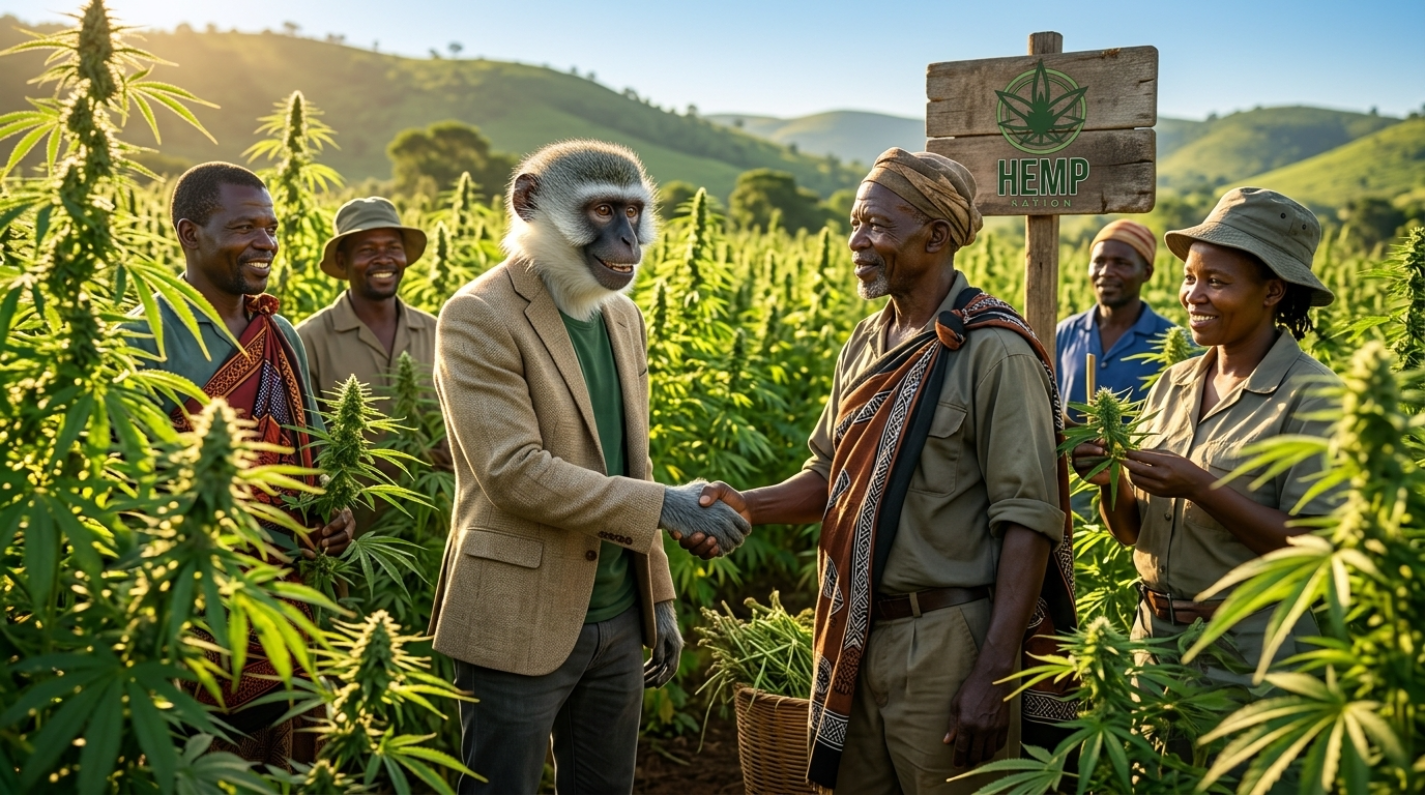
Second, it would build public educational programmes before large-scale commercialization, especially for rural communities and landholders likely to be approached first by investors or intermediaries (Hemp Nation Meeting on Eswatini cannabis development, July 2026).
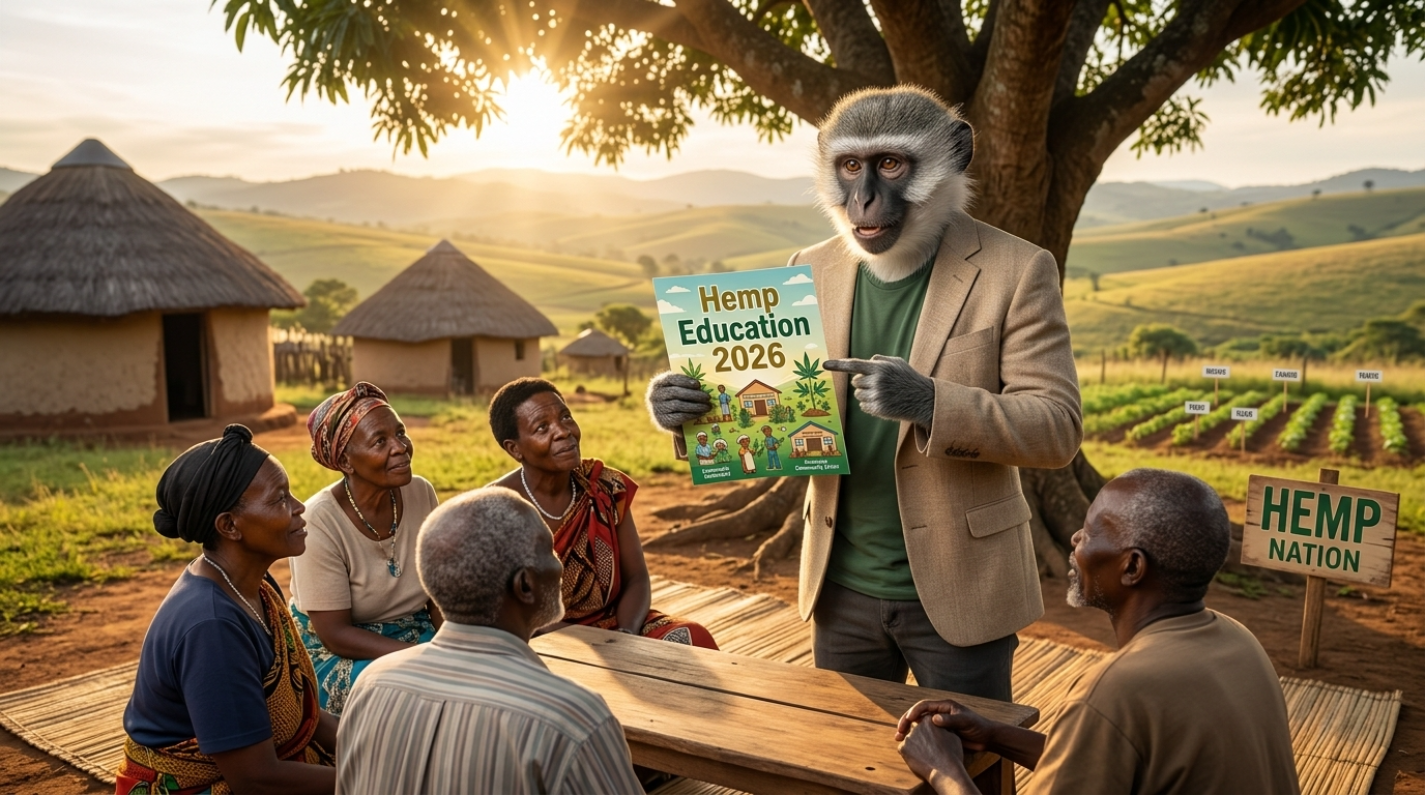
Third, it would ensure that research partnerships, seed trials, and licensing pathways are transparent enough to prevent capture by small circles of influence (Hemp Nation Meeting on Eswatini cannabis development, July 2026).
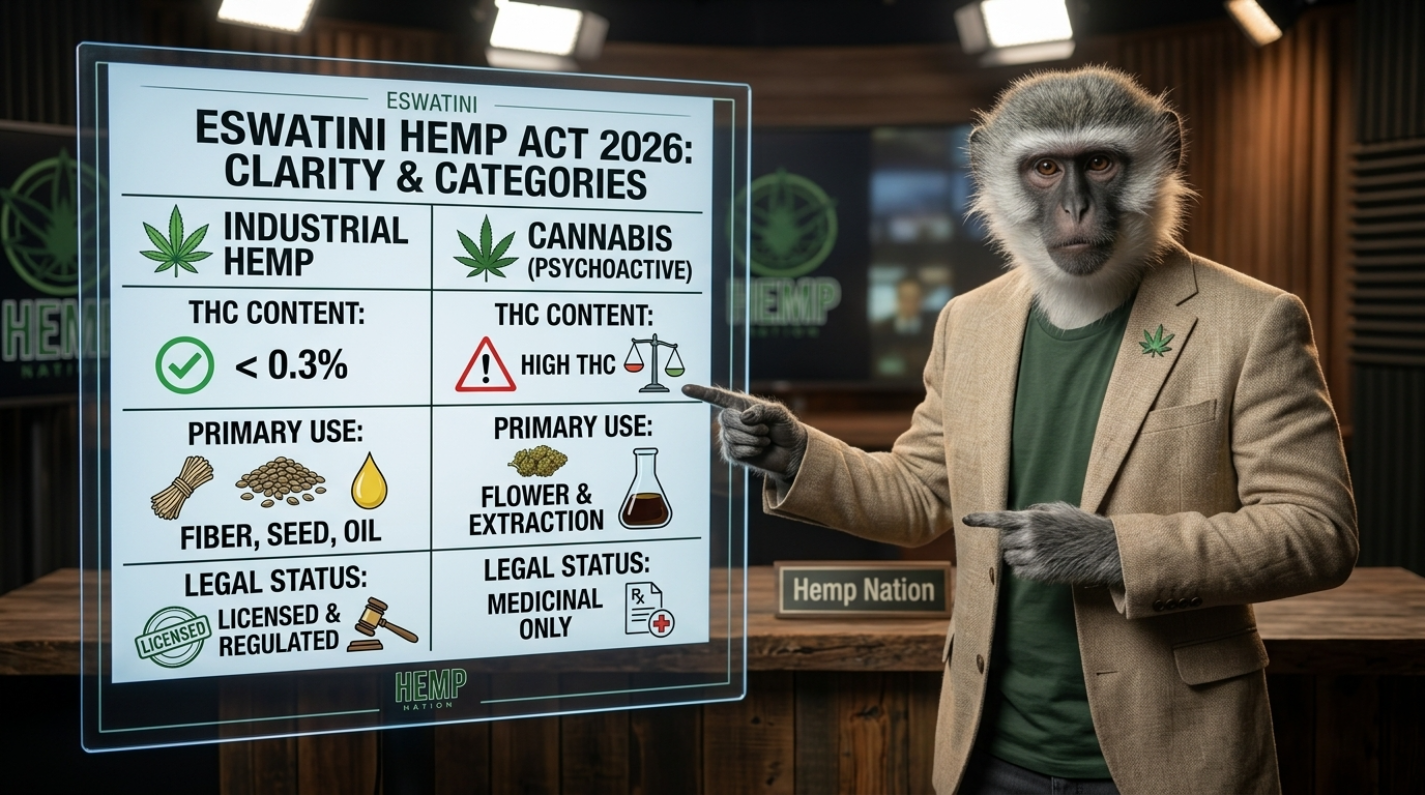
Fourth, it would embed farmer participation into the value chain itself, rather than treating emaSwati merely as growers or land providers for better-connected processors and exporters.
This is the deeper point: the danger is not only that Eswatini will move too slowly. It is that it will move just fast enough for the well-connected to secure position before the public understands the game.
That is why the dream has to be bigger than the plant.
The dream is not a semi-legal market becoming a legal one for the benefit of the same insiders. The dream is a Swazi industry with Swazi knowledge, Swazi participation, and Swazi leverage. The dream is not only cultivation, but education; not only research, but access; not only regulation, but fairness.
If the country is serious, the first crop to be grown should be trust.
And trust, unlike influence, cannot be granted through the back door.