
Smuggling Without Trying: Travelling With Cannabis in the Age of Airport Scanners
There are two kinds of travellers in this life.
The first kind double-checks their passport the night before, lays out their outfit, and arrives at the airport three hours early with a printed boarding pass “just in case.”
The second kind remembers, somewhere between the boarding gate and the duty-free whiskey, that there might still be a forgotten power bank, a rogue vape, or a suspicious-looking plastic baggie buried in a side pocket from a trip three years ago.
This story is about the second kind.
The Vape That Wasn’t the Problem
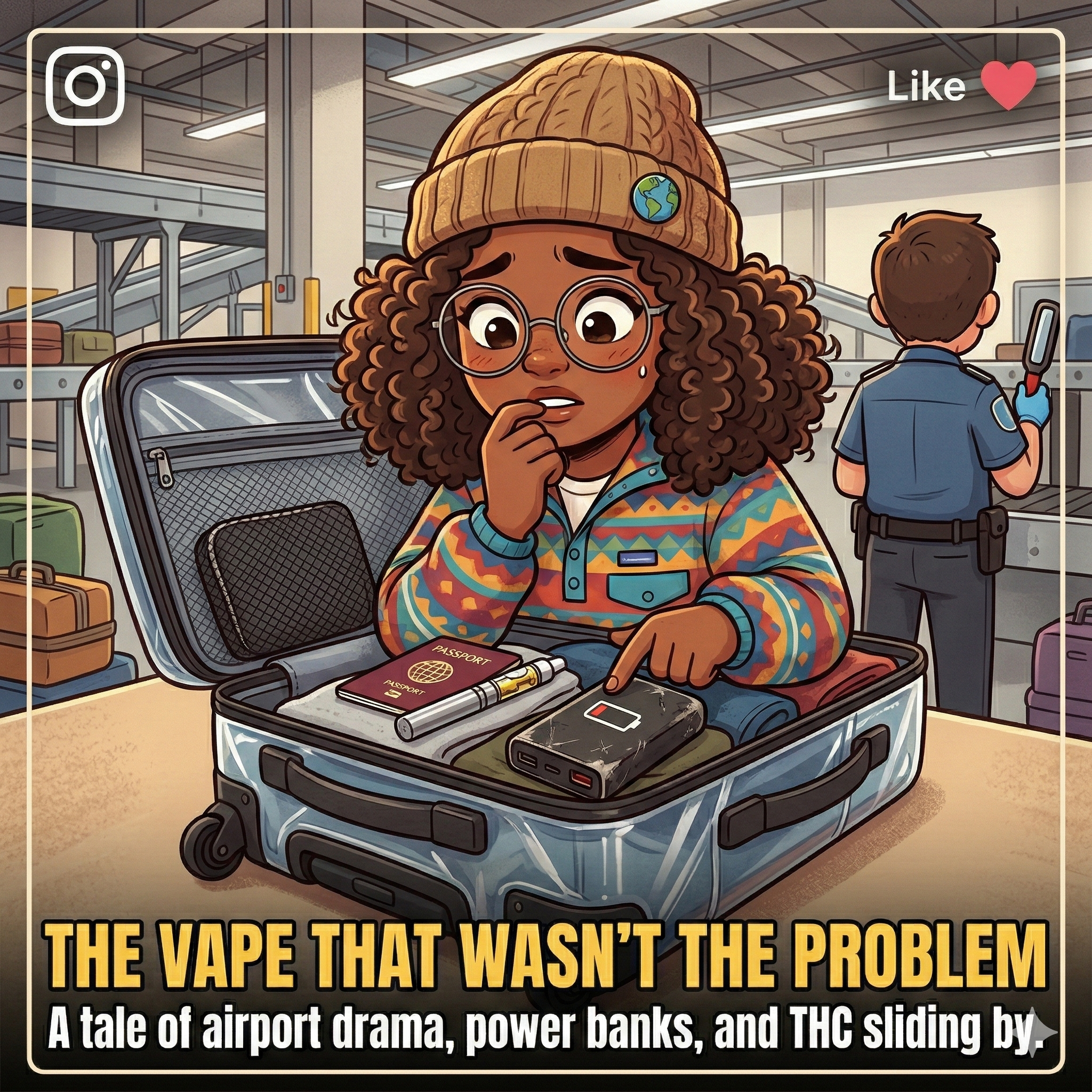
Recently, one of our crew flew from South Africa to Finland in the middle of European winter, armed with the essentials: warm clothes, good spirits, and a vape carefully tucked into checked luggage. The part that was supposed to be risky—the vape—went through security like it was invisible.
What triggered full airport drama was not cannabis. It was an old, half-dead power bank.
By the time the call came from Turkish Airlines, bags were checked in, drinks were ordered, and the trip had officially begun. Then the
phone rang: something had been “detected” in the luggage, and the airline needed the passenger to come supervise the inspection.
In that moment, the mind doesn’t say “old electronics.” It says: “They found the weed.”
Backstage at the airport, in the concrete belly where conveyor belts twist and suitcases disappear, the staff cut open the plastic wrap, unpacked the bag slowly and carefully, running through the standard script:
“Did you pack this bag yourself? Are you aware of all the contents?” Of course the answer was yes. Until it wasn’t.
Because buried in a forgotten pocket was a relic from another life: an old power bank that barely held a charge. That was the “threat.” That was the reason for the call, the unpacking, the tension.
The vape?
It travelled in and out of the country like a tourist with all the right stamps.
The Lesson
The lesson from this leg of the journey is strangely simple: airports are more worried about lithium than THC. Travelling with a vape is often less visible than travelling with the wrong battery in the wrong place. You must keep power banks in hand luggage. You must respect the rules around electronics. But that little cartridge, as long as it looks like any other vape and not a billboard for weed culture, often slides right past the radar.
We are not saying “it’s legal.”
We are saying: it’s complicated, uneven, and full of human blind spots.
The Case of the Forgotten Baggie
If our first story is about modern travel, the second one belongs to another era—but the energy is the same.
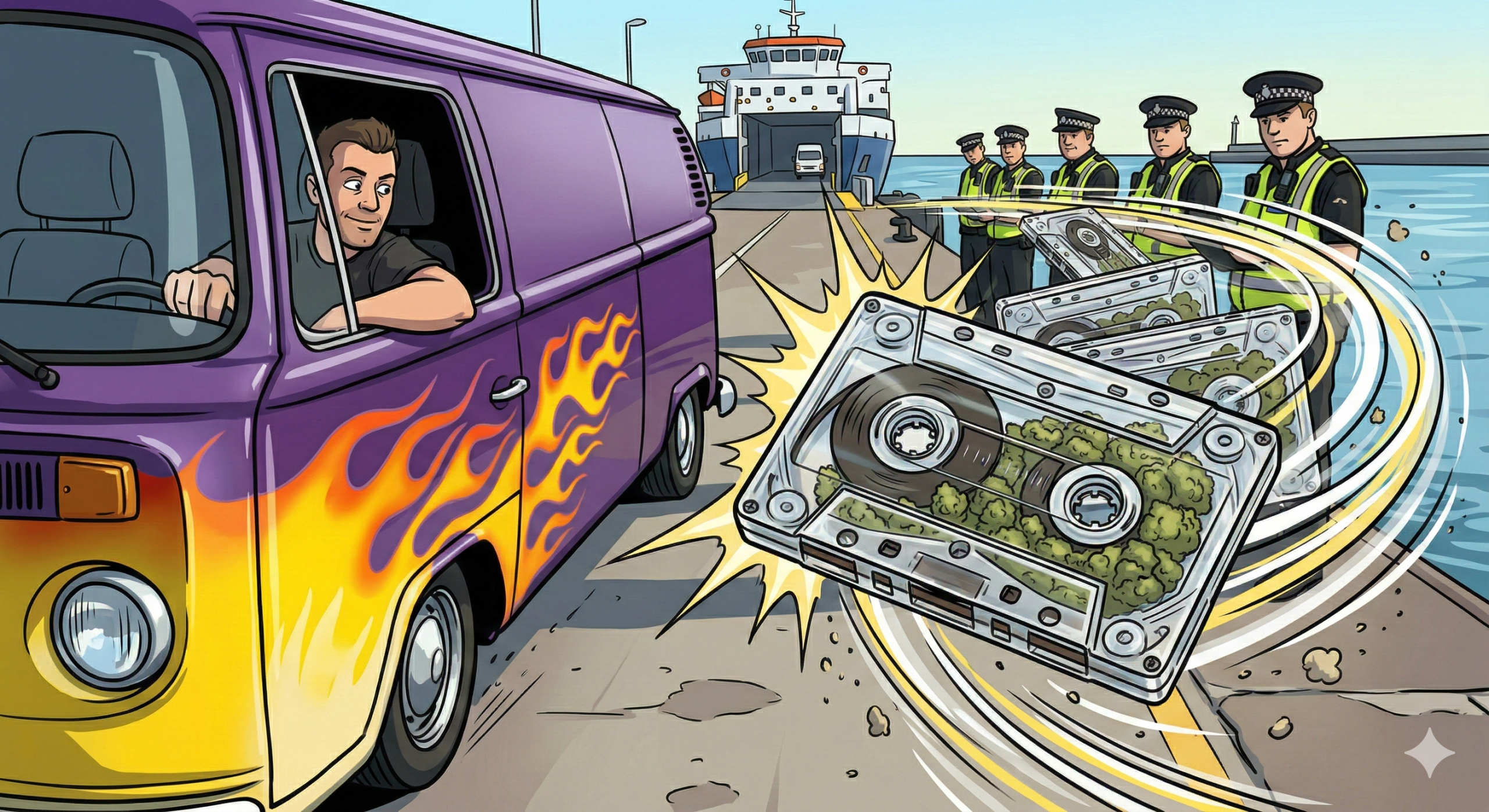
Picture this: a purple VW panel van with flames up the side, low suspension, loud exhaust, and a driver who looks like he stepped out of a festival poster. The mission: drive from the UK to France, load up on cheap alcohol and tobacco, and bring it back for resale at university. Not a cartel, just classic student hustle.
On the way into France, the gendarmes see the van and do what any self-respecting border police would do: they pull it aside and strip it. Mattresses up, toolboxes open, floor panels checked. Four officers in the back, searching for contraband.
They find nothing.
Because at that moment, there is nothing. The van is loud, suspicious looking, and completely clean.
The Mission
Fast forward. The mission is complete. The van is now full of legally purchased alcohol and tobacco riding just at the edge of personal allowance. The ferry crosses back to the UK. As the van rolls off the boat, British police line the side of the dock.
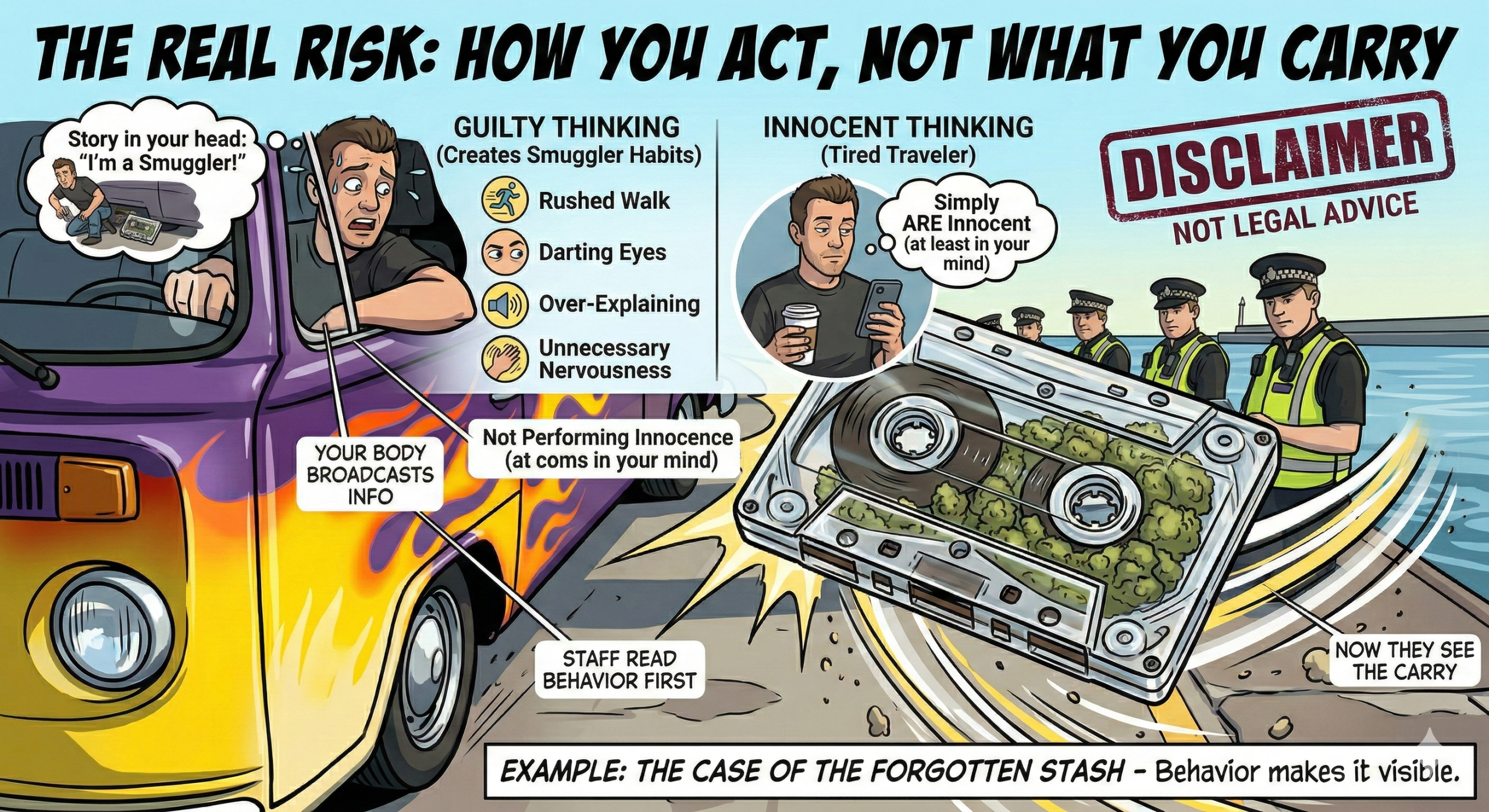
The driver glances at them, then reaches under his seat and pulls out a clear cassette tape case, fully loaded with weed.
“I forgot this was in here,” he says.
Panic hits. He winds down the window and frisbees the cassette case into the sea, sacrificing the stash to the gods of poor memory and border anxiety.
And then they drive past the police.
No one stops them. No one searches them. No one even looks twice at the purple van with flames that had been a magnet for attention only hours earlier.
The Irony
The irony is painful and perfect: when there was nothing in the van, they were thoroughly searched. When there was something in the van, nobody cared.
The lesson here is not that smuggling is “easy.” It’s that humans are bad at predicting where attention will land. Fear makes us clumsy, and forgetfulness is its own kind of camouflage.
The Amsterdam Accident
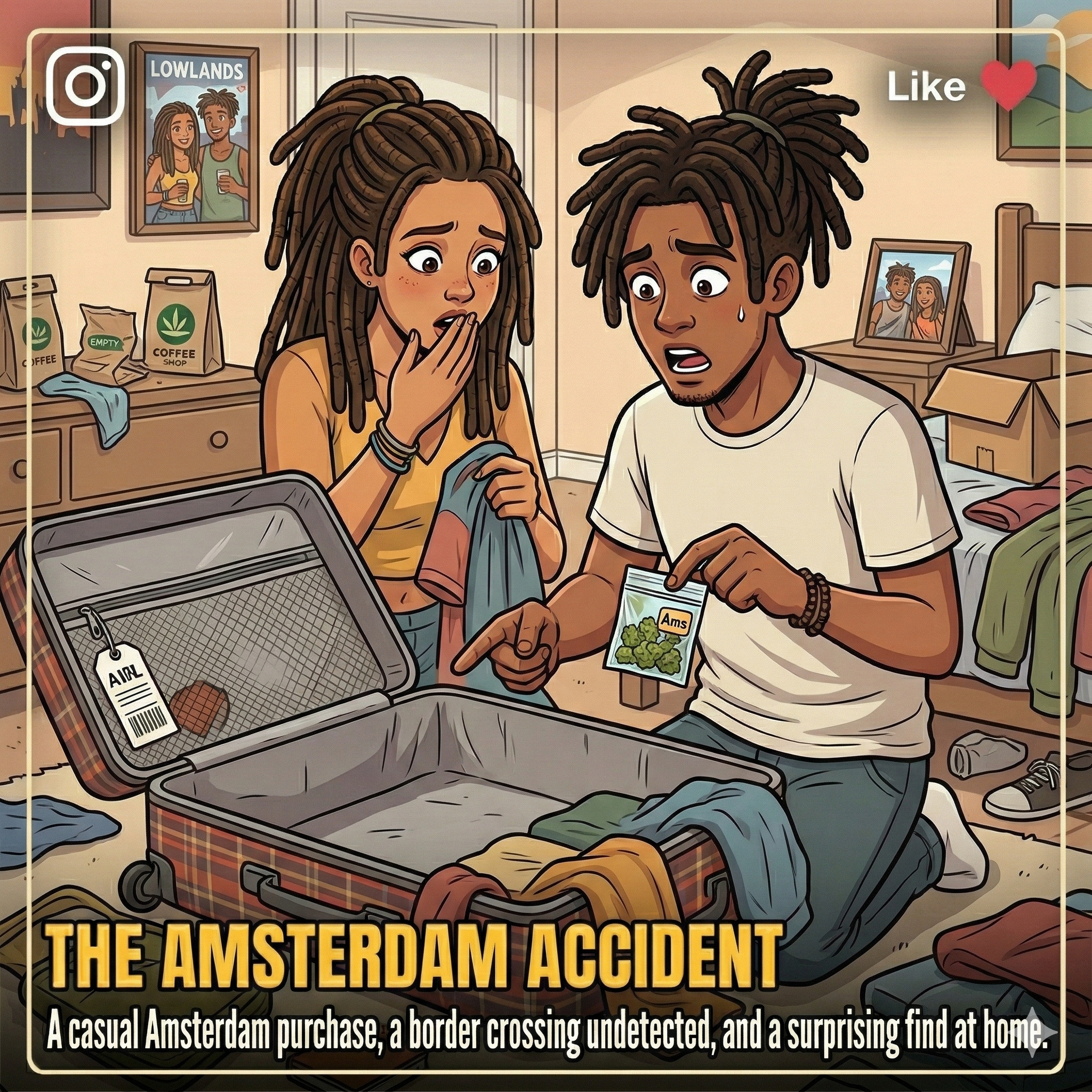
Then there’s the story from another time, another trip. First visit to Amsterdam for the Lowlands festival. The tourist routine: arrive, visit a coffee shop, buy five or six little baggies, enjoy the festival, head home.
Weeks later, unpacking at home, there it was: a forgotten baggie tucked into a side pocket of the checked luggage.
It had travelled across borders, through X-ray machines, past customs agents, and landed safely home without a single alarm bell.
The reaction was simple: immediate outdoor consumption with a friend, equal parts relief and disbelief.
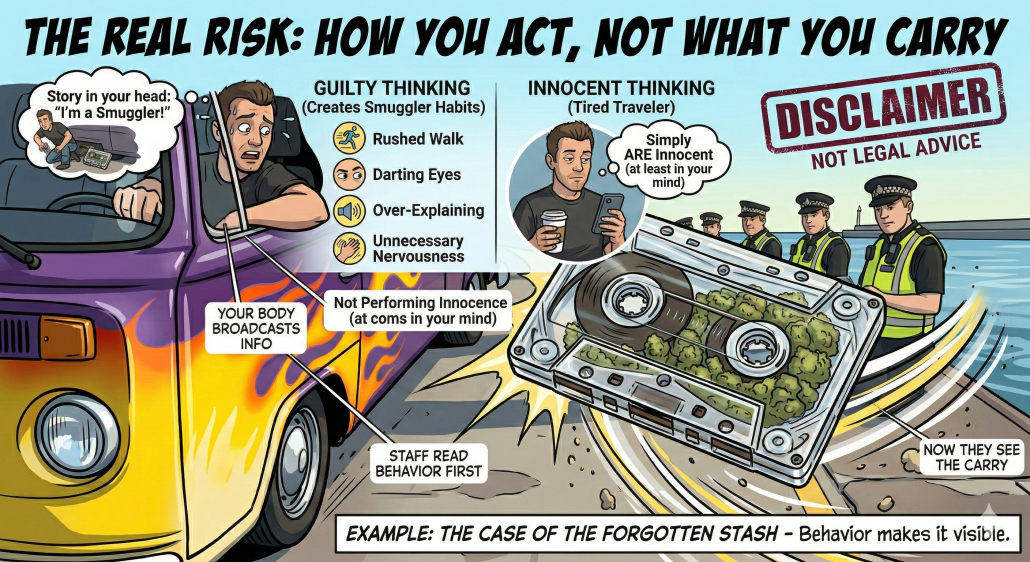
The Real Risk: How You Act, Not What You Carry
Across all these stories, a pattern emerges.
The most dangerous thing at the airport is often not the object in your bag. It’s the story in your head.
If you know you’re carrying something “naughty,” your body broadcasts that information before the scanner does. The rushed walk. The darting eyes. The over-explaining. The unnecessary nervousness at perfectly normal questions. All of that raises more suspicion than a plastic cylinder with a little liquid and a coil.
If you don’t know you’re carrying anything illegal, you behave like every other tired traveller. You’re not performing innocence. You simply are innocent—at least in your own mind—and security staff read that.
A Word of Caution
Again, this is not legal advice. Every country, every airport, every officer, and every day is different. Some places will swab every vape. Others won’t look twice. Some borders are relaxed; others build entire TV shows around how harsh they are.
What we can say is this: prohibition builds weird habits. People who just want to medicate or relax end up moving like professional smugglers, rehearsing answers, hiding devices, and worrying more about a pen-sized vape than about the massive surveillance system humming around them.


Leave a Reply
Want to join the discussion?Feel free to contribute!